

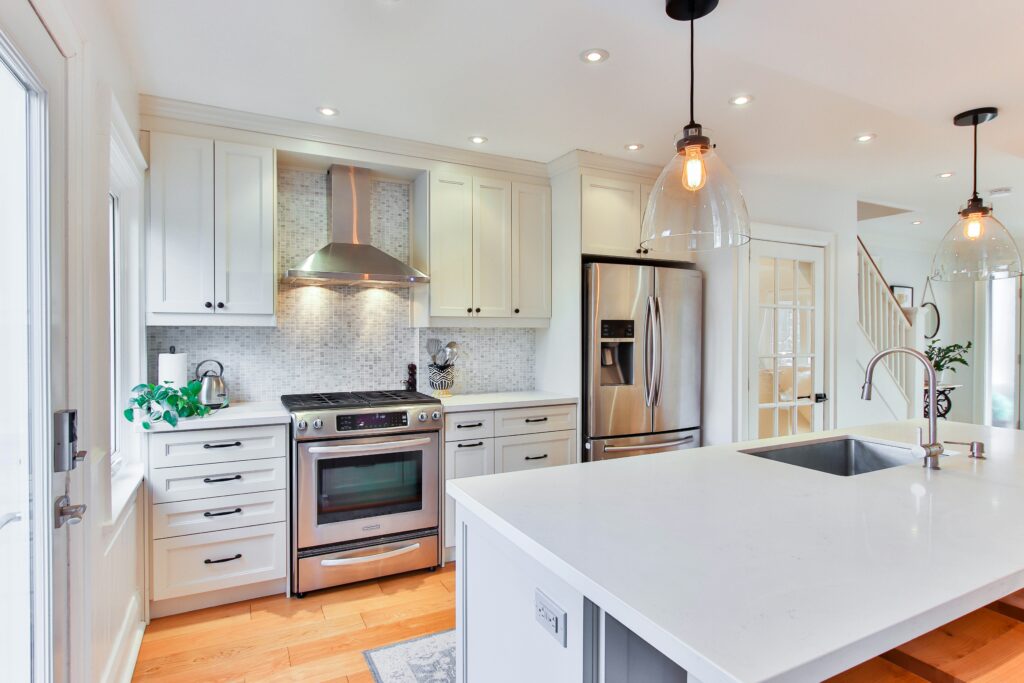
Your kitchen isn’t working for you anymore — but you’re not sure whether to remodel what you have or add on to create something bigger. It’s one of the most common decisions Massachusetts homeowners face, and the right answer isn’t the same for everyone. It depends on your budget, your lot, your home’s current layout, and what you’re actually trying to solve. This guide breaks down the real differences between a kitchen remodel and a kitchen addition, what each one costs in Massachusetts, and how to figure out which path makes more sense for your specific situation. If you’d like to talk it through with someone who builds both, reach out to Dan’s Construction for a free estimate and we’ll help you think through the options.
What’s the Difference Between a Kitchen Remodel and a Kitchen Addition?
Before getting into costs and tradeoffs, it helps to be clear on what each term actually means — because they get used interchangeably and they shouldn’t be.
A kitchen remodel means transforming the kitchen you already have. You’re working within the existing footprint — same square footage, same walls — but updating or replacing what’s inside. That might mean new cabinets, countertops, flooring, appliances, lighting, and layout changes that don’t require moving exterior walls. A remodel can be a cosmetic refresh or a full gut renovation, but the physical size of the kitchen stays the same.
A kitchen addition means physically expanding the kitchen by adding square footage. That typically involves bumping out an exterior wall, converting adjacent space, or building a new structure that connects to the existing kitchen. The result is a larger kitchen than you started with. A kitchen addition is a construction project first and a renovation project second — it requires foundation work, framing, roofing, and a building permit, in addition to all the interior finish work.
The distinction matters because the two projects have very different scopes, costs, timelines, and approval processes. Understanding which one you actually need starts with understanding what problem you’re trying to solve.
When a Kitchen Remodel Makes More Sense
A remodel is the right call in most situations where the kitchen’s size isn’t the core problem. Here are the scenarios where a remodel wins:
Your kitchen is a functional size but feels dated. If you have adequate counter space, enough storage, and a layout that works, a remodel can completely transform how the kitchen looks and functions without the cost and complexity of adding square footage. New cabinets, stone countertops, updated lighting, and modern appliances can make a 15-year-old kitchen feel brand new.
Your budget is limited. A mid-range kitchen remodel in Western Massachusetts typically runs $25,000 to $60,000. A kitchen addition starts higher and can easily reach $80,000 to $150,000 or more depending on scope. If budget is a constraint, a well-planned remodel almost always delivers more value per dollar than an addition.
Your lot doesn’t have room to expand. If your home is close to its setback limits — the minimum distance from your property lines required by your town’s zoning bylaws — a kitchen addition may not be possible without a variance. A remodel works within your existing structure, so zoning isn’t a factor. Our kitchen remodeling service covers everything from layout reconfiguration to full gut renovations.
You want less disruption. A remodel is disruptive enough — you’ll be without a functional kitchen for several weeks — but an addition is a significantly bigger construction project. If minimizing disruption to your daily life is a priority, a remodel is the more manageable path.
You’re planning to sell within a few years. Kitchen remodels consistently rank among the highest ROI home improvement projects in Massachusetts. A well-executed mid-range remodel typically recoups 60–80% of its cost at resale. An addition adds more value in absolute terms, but the payback period is longer and the cost to achieve it is much higher.
When a Kitchen Addition Makes More Sense
There are situations where no amount of remodeling will solve the problem — and that’s when an addition becomes the right conversation to have.
Your kitchen is genuinely too small for how you use it. If two people can’t comfortably cook at the same time, there’s no place for anyone to sit, or you’ve already maxed out the storage a remodel can offer, you’ve hit the limits of what’s possible within the existing footprint. Reconfiguring a small kitchen just rearranges the same constraints. More square footage is the only real fix.
You want to open the kitchen to another living space. Open-concept kitchens that flow into a dining area or family room are one of the most requested features in Massachusetts home renovations. Sometimes this can be achieved by removing an interior wall during a remodel. Other times the kitchen and adjacent spaces are both too small to work without actually adding square footage — and that’s an addition. Our home additions service handles exactly this kind of project.
You’re planning a major renovation anyway. If you’re already undertaking a significant home addition — adding a new wing, finishing a basement, or building an in-law suite — incorporating a kitchen expansion into the same project can be cost-effective since permitting, site work, and contractor mobilization costs are shared across the overall scope. Take a look at our new construction and home building services if you’re thinking about a larger project.
You plan to stay in the home long term. The higher upfront cost of a kitchen addition is easier to justify if you’re going to enjoy it for 15 or 20 years. The quality-of-life improvement from a kitchen that truly works for your family is significant, and the long-term value added to the home is real — especially in the Western Massachusetts market where functional square footage commands strong resale premiums.
Kitchen Remodel vs. Kitchen Addition: Cost Comparison in Massachusetts
Cost is usually the deciding factor, so here’s a realistic breakdown of what each project runs in Western Massachusetts in 2026:
Kitchen Remodel Costs in Western MA:
- Basic refresh (new hardware, paint, lighting, minor updates): $10,000 – $20,000
- Mid-range remodel (new cabinets, countertops, appliances, flooring): $25,000 – $60,000
- Full gut renovation (layout changes, custom cabinetry, high-end finishes): $60,000 – $100,000+
Kitchen Addition Costs in Western MA:
- Small bump-out (adding 50–100 sq ft): $30,000 – $60,000
- Mid-size addition (adding 100–200 sq ft): $60,000 – $120,000
- Large addition (adding 200+ sq ft with full finish work): $100,000 – $180,000+
A few things worth noting on these numbers. First, a kitchen addition almost always includes a full interior remodel of the expanded space — so you’re paying for both the construction and the finishes. Second, older Western MA homes often require electrical panel upgrades, plumbing rerouting, or structural reinforcement that aren’t obvious until the walls are opened. Budget a contingency of 10–15% above your contractor’s estimate for either project type.
These are general estimates for the Western Massachusetts market. Your actual cost will depend on your home’s specific conditions, material selections, and project scope. Contact us for a free on-site estimate and we’ll give you a number grounded in your reality.
Which One Adds More Value to Your Massachusetts Home?
Both projects add value — but in different ways and to different degrees.
A kitchen remodel is one of the highest-ROI projects in the Massachusetts market. A mid-range remodel typically recoups 60–80% of its cost at resale, and an updated kitchen is consistently one of the top features buyers look for. The key is not over-improving for your neighborhood — spending $100,000 on a kitchen in a neighborhood where homes sell for $350,000 won’t return full value.
A kitchen addition adds more absolute value because it increases your home’s total square footage and functional living space, both of which directly affect appraisal value in Massachusetts. The ROI percentage is typically lower — closer to 50–70% — because the total investment is higher. But the dollar value added to the home is often greater than a remodel alone.
The smartest approach for most Western MA homeowners is to match the project scope to the home’s value ceiling in your specific area. A knowledgeable local contractor can help you think through what makes financial sense before you commit.
How to Decide Which Is Right for Your Home
If you’re still on the fence, here are four questions that will point you in the right direction:
Is the problem the size or the condition? If your kitchen is a reasonable size but outdated, remodel. If it’s genuinely too small to function well, addition.
Does your lot have room? Check your town’s setback requirements before assuming an addition is possible. Your contractor should review zoning before any plans are drawn.
What’s your budget? Be honest. A kitchen addition done right in Western MA is a $60,000–$150,000 project. If that’s not realistic, a well-planned remodel at $30,000–$60,000 can still transform your kitchen dramatically.
How long are you staying? Short term — remodel. Long term — both options make sense, but an addition becomes easier to justify the longer you’ll enjoy it.
Talk to a Local Western MA Contractor Before You Decide
The remodel vs. addition decision is one that really benefits from an experienced set of eyes on your specific home. The right answer depends on your layout, your lot, your budget, and your goals — and it’s hard to know which path makes more sense until someone who builds both has actually walked your space.
At Dan’s Construction Services, we’ve helped Western MA homeowners work through exactly this decision. We build kitchen remodels, home additions, bathroom remodels, decks, and more — so we’re not going to steer you toward one option just because it’s what we specialize in. We’ll tell you what actually makes sense for your home.
Contact us today for a free on-site estimate. You can also reach us at (413) 351-5125 or dansconstructionservice@gmail.com.
Frequently Asked Questions
Can I remodel and add on at the same time? Yes — and it often makes sense to do both together. If you’re already going through the disruption and permitting process of an addition, finishing the interior as part of the same project is more cost-effective than coming back to remodel later. We manage combined addition and remodel projects regularly through our kitchen remodeling and additions services.
Do I need a permit for a kitchen remodel in Massachusetts? It depends on the scope. Cosmetic updates — painting, hardware, appliances — don’t require permits. But any work involving electrical, plumbing, or structural changes does. A kitchen addition always requires a building permit. We handle all permitting on your behalf.
How long does each project take? A mid-range kitchen remodel in Western MA typically takes 6–10 weeks from demo to completion. A kitchen addition takes longer — plan for 3–6 months including permitting, construction, and interior finish work.
Will a kitchen addition make my home harder to sell? Not if it’s done well and permitted properly. An unpermitted addition is a problem at resale. A well-built, permitted kitchen addition that adds functional square footage is a genuine asset in the Massachusetts market.
Does Dan’s Construction do both kitchen remodels and additions? Yes. We handle kitchen remodeling, home additions, and combined projects across Western Massachusetts. We’re based in Ludlow, MA and offer free on-site estimates with no pressure.